
If you’re in the market for a new telescope there are two main choices to consider. They are the reflector and refractor telescope. So, the natural question to ask is which is better: a reflector or refractor telescope? There is no easy answer, the choice will be determined by what you want to view with your telescope.
A refractor telescope uses a series of specialized lenses to view deep space objects. A reflector telescope uses mirrors that have improved sensitivity across all wavelengths. This makes a reflector model an ideal choice for viewing nearby planets and the Moon. In this article, we will take a look at both telescope types in more detail to help you make an informed purchasing decision.
What is a Reflector Telescope?
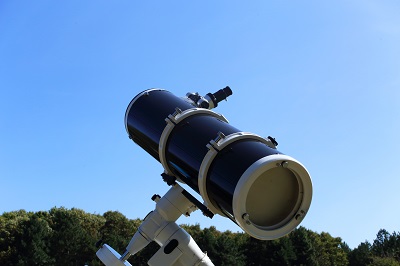
The mirror inside a reflector telescope reflects the incoming light at different angles inside the optical tube. This extends the overall path of light to improve the overall viewing experience. Reflector telescopes tend to be more affordable because mass mirror manufacturing is cheaper than making large single lenses found in refractor telescopes. Reflector telescopes are less prone to color fringing which means that you’re going to be getting good value for money for a relatively high aperture.
Certain models even have a simple to use rocker box mount to improve the support. These telescopes are available in a wide variety of sizes, but the larger models can be very big and heavy. Purchasing the largest reflector telescope that you can afford is a good option if you want a high-aperture scope without breaking the bank. But, larger telescopes are harder to transport and store safely and this should be considered carefully before you make a final decision.
What are Reflector Telescopes Used for?
A reflector telescope maximizes the amount of light in the image and this is important if you want to view celestial bodies. These types of telescopes are considered to be an ideal starting point for newbie astronomers due to their lower price point. Certain telescope models can be very expensive, but you can get a good reflector telescope for a modest investment.
Best Features of a Reflector Telescope
- A reflector telescope can capture a lot of light for an improved viewing experience.
- The large aperture makes these telescopes ideal for viewing deep-sky objects.
- The mirrors prevent chromatic aberration (blurring).
- These are ideal telescopes for new astronomers.
- Reflector telescopes are very affordable.
What is a Refractor Telescope?
A refractor telescope uses special lenses to focus the incoming light and this forms the image. The size of the lens will determine the length of the optical tube and the overall size of the telescope. Manufacturing these special lenses is a time consuming and difficult process and the largest refractor telescopes can be very expensive. The smaller refractor telescopes are usually smaller than reflector telescopes. This makes them a portable option that is a great option for terrestrial and celestial viewing.
What is a Refractor Telescope Used for?
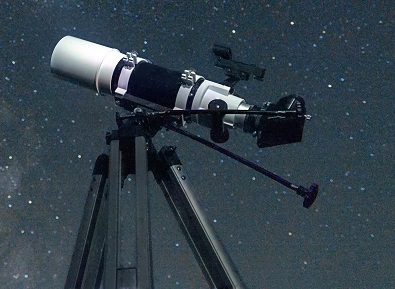
A refractor telescope can be a better option when it comes to viewing a deep-sky object. Observing beyond the Moon and out to nearby planets is certainly possible for newbie astronomers and those with more experience. The smaller models have a significant advantage when it comes to portability which is ideal if you want to view them in different locations.
What are the Advantages of a Refractor Telescope?
- Refractor telescopes are beginner friendly and easy to use.
- These are closed systems that protect the lenses.
- The image distortion is low.
- The images appear in a right-side up orientation.
- There is no need for collimation to create a clear image.
Reflector vs Refractor Telescopes: What are their differences
To determine which is better, reflector or refractor telescopes, let’s take a look at nine major differences.
1/ Collecting and Focusing Incoming Light:
Refractors use lenses and reflectors use mirrors for this purpose.
2/ Chromatic Aberration:
Most refractor telescope lenses don’t focus every incoming wavelength of light to the exact same point. This can cause chromatic aberration (CA) which creates unwanted colors on the surface of bright objects. This is very noticeable in refractor telescopes with a shorter focal ratio. But this phenomenon can be minimized with certain optical glass types.
3/ Reflector Telescopes and CA:
Every reflector is apochromatic, every light wavelength is focused at a single point and this produces no CA problems.
4/ Reflector Coma:
Short focal length reflector telescopes focus the light to the same focus at the center and edge of the image. This phenomenon is known as “Coma” and in longer (F6 or more) focal ratios this is not a major problem.
5/ Reflectors are Lighter:
A reflector telescope is lighter per inch of aperture and they don’t need the larger mounts required for refractors. The largest reflectors such as the Hubble Telescope can even be sent into space.
6/ Reflectors are Less Expensive:
A reflector telescope is less expensive per inch of aperture when compared to refractors. This makes them an excellent choice for new astronomers that want to explore the field on a budget.
7/ Adaptive Optics:
A reflector telescope can have adaptive optics to compensate for atmospheric turbulence which can cause disruption effects. A refractor cannot utilize these technologies past a point where the weight of the lens will deform the surface of the lens.
8/ Alt-Azimuth Mounts:
Reflector telescope designs are less expensive but they can be mounted on Alt-Azimuth mounts. These are portable, inexpensive, and capable of handling larger reflectors with ease.
9/ Lens Positioning:
The refractor lens is located at the front and reflectors have a mirror located near the tube bottom. Viewing objects directly above is easier with a reflector because the light rays are bounced up and angled onto the eyepiece.
Do Refractor and Reflector Telescopes Have Anything in Common?
Refractors and reflectors both collect light and concentrate it to create an image that we can view. The refractor has a convex lens at the front to focus the light at the rear of the tube to view. The reflector has a concave mirror that reflects the light to a focal point and angles it to the eyepiece. At the eyepiece, both telescopes produce a discernible image and the viewer will not notice much of a difference under most conditions.
Reasons for Choosing Reflector or Refractor Telescope
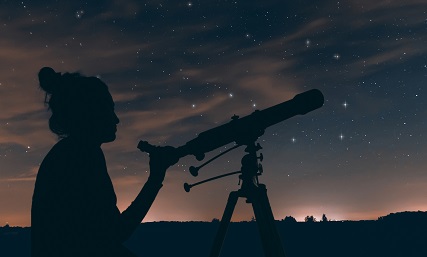
So, which is better, a reflector or refractor telescope? There are certain situations where one type is superior to the other and many astronomers will have access to both. For those interested in astrophotography, the refractor telescope is a better choice. The special optics can capture deep space objects such as nebulae and galaxies to create spectacular images. People that want to look at brighter or closer celestial objects such as the Moon or planets will find a reflector to be an ideal pick.
Reflector telescopes have larger apertures at a similar price, which makes them a great option for virtually any viewing task. These are a decent option for deep sky astrophotography, but beginners will experience a steep learning curve. Reflectors require very precise settings and maintenance to get the best out of the experience.
Refractor telescopes are pretty expensive at similar aperture sizes to reflectors. But, they are a great option for deep sky astrophotography and they are simple to use. At the smaller sizes, they are more affordable and portable which is a good option if you don’t have a permanent viewing space.
Conclusion
When it comes to a final choice, which is better: a reflector or refractor telescope? If you want to view the Moon, planets, and other closer space objects the reflector is a good choice. It has great image quality at an affordable price and they are beginner friendly.
To view deep-space objects, choosing a refractor telescope makes more sense. There are no collimation issues, they don’t need much maintenance and they offer better magnification in smaller models. But, less expensive refractor telescopes should be avoided because they tend to have poor image quality.
