Best Telescopes, Binoculars and Microscopes
Detailed reviews and buyers guides for Telescopes,
Binoculars and Microscopes. We make it easy for
you to find the right one at the best price

Detailed reviews and buyers guides for Telescopes,
Binoculars and Microscopes. We make it easy for
you to find the right one at the best price
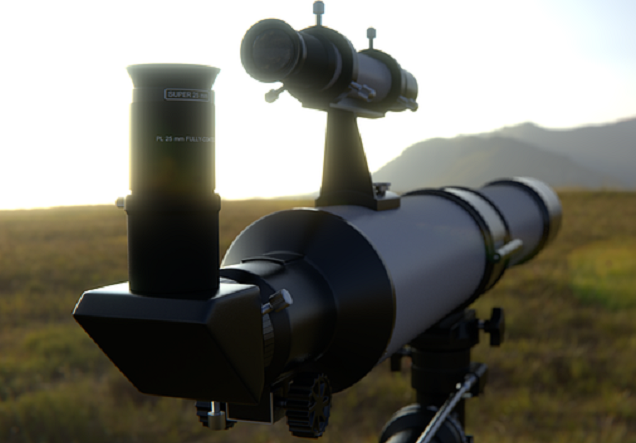
If you are in the market for the best telescopes, you can get overwhelmed by the different types of telescopes, especially if you are a novel stargazer. By simply looking at the telescope specs, you may not be able to tell which one suits your needs because you may not understand what the specs mean and how they affect your viewing.
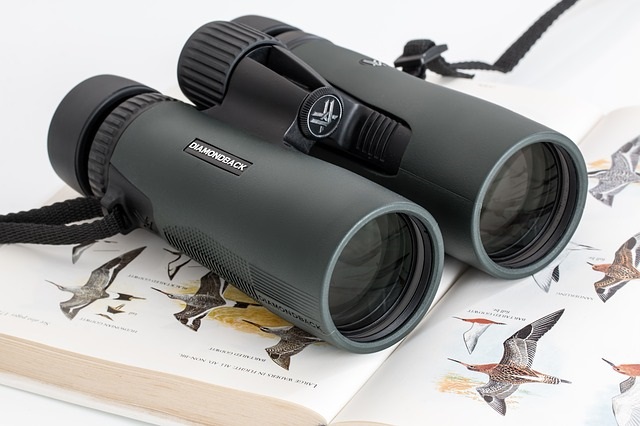
A pair of binoculars is must-have equipment if you want to partake in activities such as hiking, hunting, bird-watching, and sightseeing. Investing in a good pair not only enhances the overall experience, but it allows you to achieve your objectives. For instance, if you were hunting, you’d spot your targets more easily.
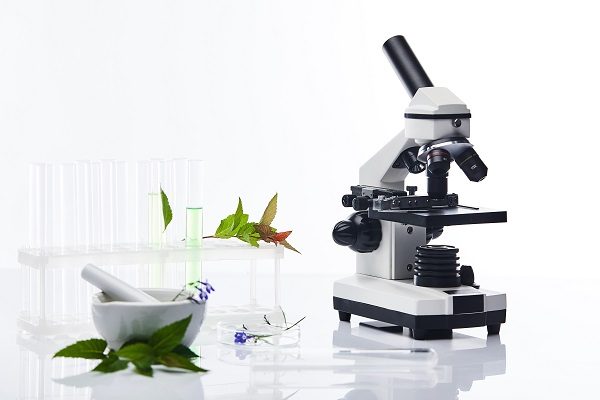
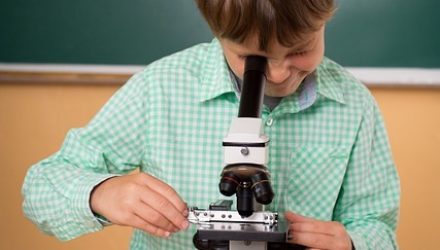
Gone are the days when the use of microscopes was restricted to laboratories, mostly in schools, research centers, and hospitals. Modern microscopes are portable, allowing you to carry them outdoors for examining insects, flowers, collectibles, and so on. Moreover, they are inexpensive and easy to use.
Hi I am Henry Woodman Founder of Scope Options. We are your trusted source of information about Microscopes, Binoculars, and Telescopes. Whether you are a beginner looking to buy your first set of gear or an expert upgrading your collection, we are here to help you pick the right gear.
We keep an eye on what’s new in the market and what to expect, making sure you are not left behind. For beginners, understanding how different optic gear work and picking the right one for your specific needs can be overwhelming. That’s why our primary goal is to simplify these topics.
Whether you are looking for the best binoculars for bird watching, hunting or stargazing, we’ve got your back. For students looking for information about microscopes, we have all the information you need.

We founded Scope Options to:
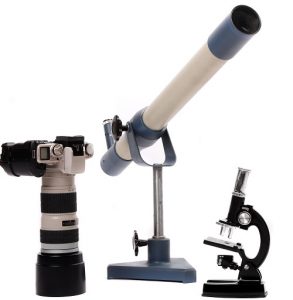
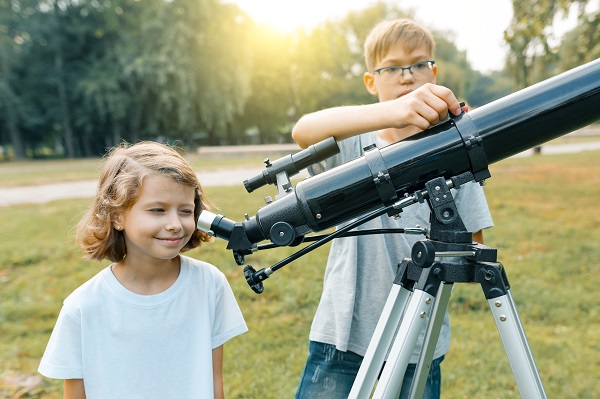
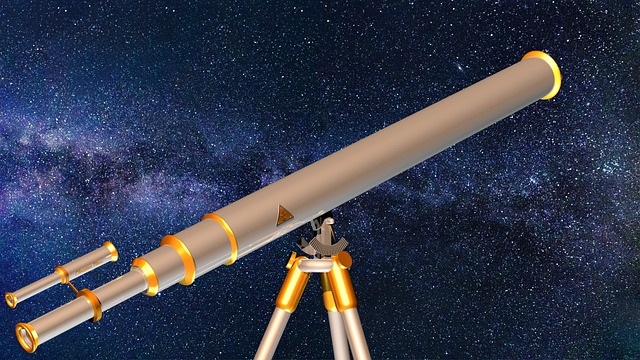
Telescopes are high magnification devices made for those who love exploring the skies. They help in seeing the stars, moon, planets, and galaxies.
They use curved mirrors, lenses, or a combination of both to function. The bigger the lenses or mirrors, the more light a telescope can gather and the clearer the image will be. Refracting telescopes are made using lenses, while those made using mirrors are called reflecting telescopes.
Mirrors work better for making telescopes because they can be made thinner and more perfect than lenses, especially if they have to be made very big.
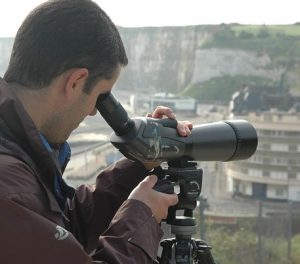
The best telescope is one that’s comfortable to use and is practical. It should provide the best view of the night sky. The most popular types of telescopes include:

Refractor telescopes are the most popular models because they have lightweight frames and are easy to set up and use. They provide sharp views and require little maintenance. Their eyepieces are interchangeable, meaning you can vary their magnifications and increase your viewing range.
Being portable, you can use them to enjoy viewing the night sky anywhere. Their apertures range from 60mm to 150mm. The small refractors, not more than 90mm in diameter, are great for a wider field of view, while large ones, from 100mm and above, are good for observing objects deeper in the sky. Refractors are great for observing bright planets, craters in the Moon, or even daytime wildlife and landscapes.
Also known as Newtonian telescopes, reflector telescopes are most popular among amateur astronomers. Their design allows for a larger aperture than the refractor telescopes, and they can be as wide as 500mm in diameter. For this reason, they are not portable, so you need to mount them in one place for your use.
They can also observe objects deep in the sky – Jupiter’s moons, Saturn’s rings, nearby galaxies, and nebulae.
Compound telescopes use a combination of mirrors and lenses. Their tubes are compact and lightweight, making them very portable. The two most popular compound telescope designs are Maksutov-Cassegrains and Schmidt-Cassegrains. These telescopes need regular tweaking to ensure the mirrors are aligned properly. They are the most expensive telescope models.
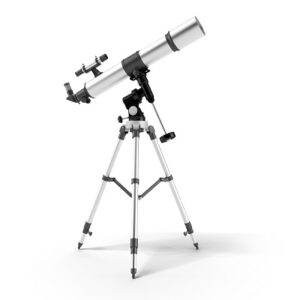
When buying a telescope, avoid the following mistakes:
Phoenicians discovered glass in 3500 BCE (Before Common Era), but it was not until 5000 years later that glass was used to make lenses to create telescopes. Holland’s Hans Lippershey is credited with the invention of telescopes in the 16th century (though he wasn’t the first to make one; he only made the device to be widely known).
Galileo Galilei, an Italian scientist, is the one who introduced telescopes to astronomy. He was the first person to use a telescope to observe Moon craters, rings of Saturn and Jupiter Moons. Later on, in 1704, Sir Isaac Newton introduced the use of curved mirrors to make telescopes.
Binoculars, aka field glasses, are a pair of handheld telescopes mounted side-by-side that magnify distant objects for better viewing. A binocular is essentially an optical instrument used to view distant objects more clearly. They make it possible to have a 3-dimensional view of faraway objects.
Most binoculars contain a series of prisms and lenses. When light passes through the prisms and lenses, its direction will change. When this happens, the image of the viewed object will also change. The object will appear nearer and bigger. A pair of binoculars has rings used to adjust the distance between the prisms and the lenses to adjust its focus and make the object appear clearer.
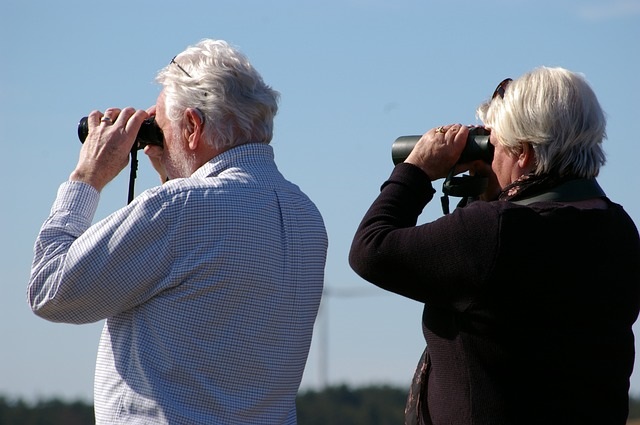
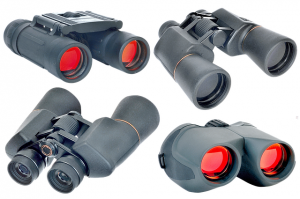
While all binoculars look a bit similar, they have different features and capabilities. Before buying a pair, consider how you intend to use them and then compare the different features.

For most backpackers and hikers, the weight and size of their pack are a significant concern. And since you will be viewing a wide range of distant objects, you will need compact binoculars with excellent magnification. The ideal magnification of a hiking binocular is either x8 or x10, and the diameter of the objective lens should not be more than 28. The best magnification and objective diameter combination include:
Other essential features of backpacking binoculars include:
If weight and size aren’t much of a concern to you, you can pick full-size or midsize models such as 8×42 or 8×32 binoculars for bird watching. A model with 8-power magnification provides a better and wider field of view, which is best for watching small birds. Water resistance is also something you need to consider. This feature will ensure your binoculars are not clouded with fog when you go bird-watching in.
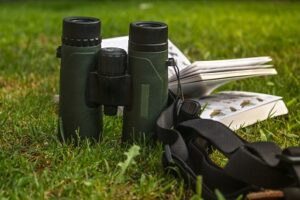
The best binoculars for wildlife viewing are the 10×42, 10×32, 8×42, and 8×32 models. A higher magnification comes in handy because you’ll likely be far away from the animals. Midsize binoculars with 10-power magnification will also do a great job.

For hunting, you don’t need bulky binoculars, so a midsize model like 8×40 would do. When it comes to magnification, choose one with 8 to 10-power magnification. You may also need a tripod because you’ll be stationary most of the time.
If you want to go paddling for fun or whale watching, you’ll need low-power magnification binoculars. A magnification of 8 will suffice. A higher magnification will make it hard for you to maintain a steady viewing. The most popular size for water-based activities is 8×32. Also, remember to choose a waterproof model.
For you to benefit more from your binoculars, avoid the following mistakes:
Magnification is the number of times an instrument enlarges the observed object. It’s usually written with the letter x (8x, 10x, 12x). Different instruments have different magnification powers. We choose instruments that offer magnifications that fit what you want to use them for.
The lens diameter is an important factor for us because it’s what determines the amount of light that enters the optical instrument. The most popular objective lens diameter includes 21mm, 25mm, 32mm, 42mm, and 50mm.
For example, a device with a rating of 8×40 produces better and brighter images than the one rated as 8×25 because it has a wider lens.
Before promoting any particular device, we check the quality of its lens(es). A coated lens is better because it doesn’t reflect too much light, but rather allows the maximum amount of light in. A high-quality lens eliminates aberration for better contrast. They also ensure the colors are not distorted or washed out.
The field of view (FoV) of a device refers to the diameter of the area it allows the user to view. FoV is measured in degrees. Devices with wider fields of view provide better viewing experiences.
Binoculars, telescopes, and microscopes are used in different weather conditions. That’s why we insist on water-resistant devices. Moisture cannot damage high-quality waterproof devices.
We also compare the sizes and weights of different devices. Portable devices are better because you can use them anywhere – they are easy to carry around.
A good model should also be easy and comfortable to use. It should not strain the eyes of the user even if used for a long time.
J.P. Lemiere is credited with the invention of the first real binocular telescope. He created one in 1825. The modern binoculars began in 1854 with Ignazio Porro’s patent for a prism erecting model. Initially, the Royal Navy had only single telescopes, but today, their ships have heavy binoculars. The first binoculars were used for watching the stars rather than watching things on the earth.
The magnification power of binoculars has limitations; the maximum magnification offered by many binoculars in the market today is 10.

Microscopes are optical instruments used to magnify tiny objects, delivering a very close view of the object that is not possible to get when using the naked eyes. The details produced allow for deep analysis and examination. Essentially, microscopes are tubes packed with curved pieces of glass (lenses) that refract (or bend) light rays that pass through them.
That’s how they make tiny objects appear bigger when observed through them. A simple microscope utilizes one convex lens and can magnify an object up to 10 times its size. Compound microscopes (with more than one lens) can magnify objects up to 1,000 times. Microscopes are used in research laboratories, schools, hospitals, homes, etc. Electron microscopes provide greater magnification than light microscopes.

There are different types of microscopes, each designed for specific uses. This means the task you have at hand will determine the type of microscope to buy. Here are different types of microscopes and where they are applicable.
These types of microscopes are best for those looking for 3-dimensional images such as wires, anatomy of small animals, fabric weaves, printed circuit boards, metal or plastic parts, insects, flowers, coins, among others. Their magnifications range from 10x to 100 and are generally inexpensive. Stereo microscopes are popular in quality control, manufacturing, coin collecting, dissection projects in high schools, botany, and science labs.
Also referred to as biological microscopes, compound microscopes are some of the most powerful microscopes. They are mostly used in veterinary offices, pathology and histology laboratories, and schools to view samples on a slide.
The magnification of compound microscopes varies between 40 to 2000x. These microscopes can be used to view tissues, algae, bacteria, parasites, cheek cells, blood cells, and thin organ sections. You can view atoms, molecules or viruses using a compound microscope.
Inverted microscopes are scientist microscopes used to observe living cells and organisms. There are two types of inverted microscopes: metallurgical inverted microscopes and biological inverted microscopes. The metallurgical models are used for viewing faults and fractures in materials.
They provide magnifications of 40, 100, 200, and 400. Biological inverted microscopes also provide the same magnifications, but they are used to view specimens placed in Petri dishes rather than on the stage like in the case of metallurgical inverted microscopes. These microscopes are used in research for studying and analyzing cells and tissues.
If you are in the manufacturing, automobile, or aerospace industries, then metallurgical microscopes are the best option for you. These microscopes are used to view opaque objects. They provide magnifications of 50, 100, and 200.
Other types of microscopes that are of interest are Polarizing Microscopes, Confocal Microscopes, Scanning Electron Microscopes (SEMs), and Transmission Electron Microscopes (TEMs), among others.
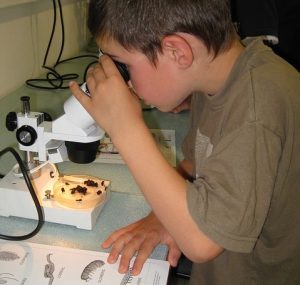
The first compound microscope was created in the 1590s by Zacharias and Han Jansen (father and son). The earliest microscopes were called flea glasses since they were used for viewing small insects. Anton van Leeuwenhoek is the one who created very powerful lenses that could be used to view bacteria.
Astronomy telescopes are more powerful than binoculars. Large telescopes can act like human eyes, creating incredibly sharp images.
Eyepieces are important components of telescopes, especially in image formation. So they are needed in telescopes.
These two devices are important because they’ll allow you to use your eyes naturally. They are better than single telescopes because they are more comfortable to use, improve visual acuity, and provide depth perception.
Can binoculars see planets?
Standard binoculars cannot be used to view a planetary surface apart from the Earth.
Mirrors are fixed on microscopes to reflect light on the specimen being observed.